

Public-sector procurement is the structured, regulated process by which government entities acquire goods and services from external suppliers through legally binding contracts. This public-sector contract explainer covers every phase of that process, from acquisition planning through post-award compliance, using frameworks like the Federal Acquisition Regulation (FAR) and the GSA Multiple Award Schedule (MAS). Contract managers and government officials who understand these mechanics gain a measurable advantage, particularly when technology modernization projects are on the line. Platforms like SAM.gov make opportunities visible, but winning and managing them requires far more than a registration.

What is acquisition planning in government contracting?
Acquisition planning is the mandatory government process that defines a procurement's scope, market approach, and contract type before any solicitation is released. It is not an administrative formality. It is the decision point that shapes every downstream outcome, from proposal requirements to delivery risk.
The FAR requires agencies to complete acquisition planning before releasing a solicitation. That requirement exists because poor planning is the leading cause of bid protests, cost overruns, and contract disputes in federal programs. When the scope is vague or the contract type is mismatched to the work, both the agency and the contractor pay the price.
Acquisition planning serves three core goals:
- Maximize competition. Agencies must structure requirements to attract qualified vendors, not write specifications that favor a single incumbent.
- Favor commercial solutions. FAR policy directs agencies to prefer commercially available products and services over custom government-unique solutions wherever practical.
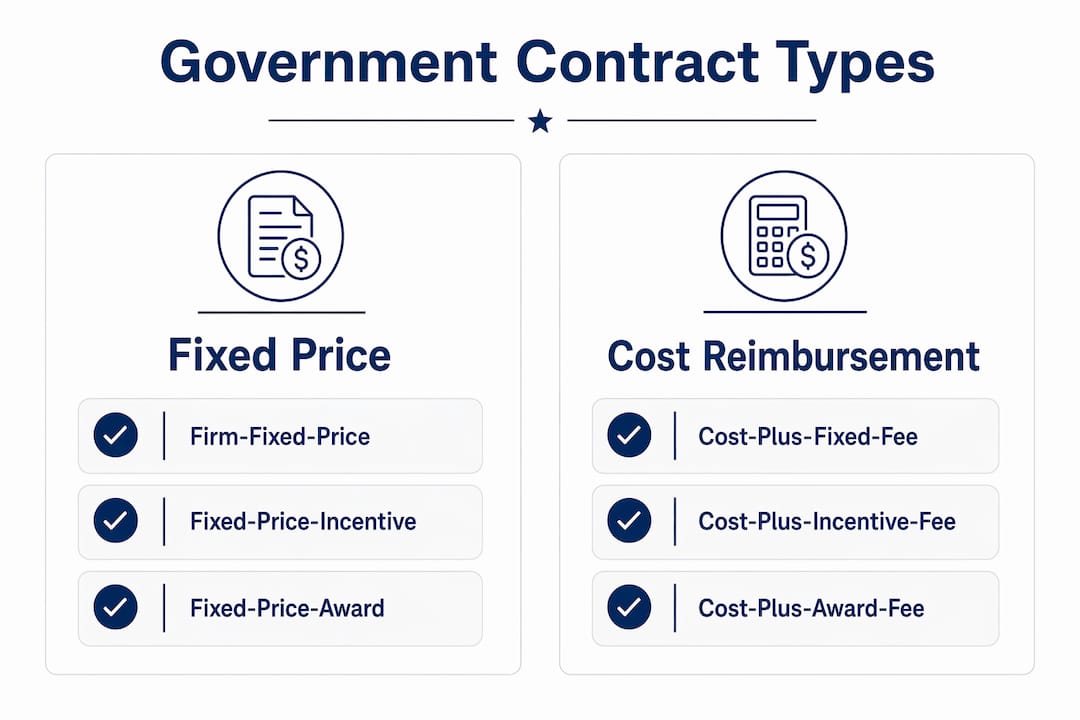
- Select the correct contract type. Choosing between firm-fixed-price, cost-reimbursement, or time-and-materials structures determines how risk is allocated between the government and the contractor.
For IT modernization projects, the acquisition strategy document carries additional weight. Contract-type rationale and milestone documentation directly shape proposal constraints and delivery risk allocation. A cloud migration effort awarded under a firm-fixed-price structure, for example, transfers nearly all schedule and cost risk to the contractor. That is appropriate only when requirements are fully defined at the time of award.
Pro Tip: If you are a vendor pursuing an IT modernization contract, request the acquisition strategy document through a Freedom of Information Act request after award. It reveals the government's risk assumptions and helps you calibrate your proposal for future opportunities.
How does the public procurement process work?
Public-sector procurement starts long before a solicitation appears on SAM.gov. Agencies begin with needs definition, budget approval, and market research. That research produces pre-solicitation notices that vendors can use to shape the final requirements.
Pre-solicitation notices take several forms:
- Sources Sought notices ask vendors to demonstrate their capability to perform a defined scope. Agencies use responses to determine whether to set aside a contract for small businesses.
- Requests for Information (RFIs) gather market intelligence on pricing, technical approaches, and industry standards. They carry no commitment to award.
- Draft solicitations invite public comment on proposed requirements before the final solicitation is released.
Engaging during pre-solicitation is the highest-leverage activity available to any contractor. Vendors who respond to RFIs and sources-sought notices influence the specification language, evaluation criteria, and contract structure before competitors even know the opportunity exists.
Once market research is complete, the agency releases the official solicitation. The three primary solicitation types are:
- Request for Proposal (RFP): Used for complex requirements where technical approach and management capability matter. Award is based on best value.
- Invitation for Bid (IFB): Used for well-defined, price-driven requirements. Award goes to the lowest responsive, responsible bidder.
- Request for Quotation (RFQ): Used for simplified acquisitions and GSA Schedule orders. Less formal than an RFP.
FAR 5.203 requires agencies to post contract notices on SAM.gov at least 15 days before releasing a solicitation. That window is the minimum. Competitive procurements for complex IT work typically allow 30–60 days for proposal preparation.
Pro Tip: Set up SAM.gov saved searches filtered by NAICS code and agency. Automated alerts give you pre-solicitation visibility before competitors who rely on manual searches.
What are the main government contract types?
Government contract types differ primarily in how they allocate cost risk between the agency and the contractor. Selecting the wrong type for a given scope creates problems that no amount of good performance can fix.
| Contract Type | Risk Allocation | Best Use Case | Key Limitation |
|---|---|---|---|
| Firm-Fixed-Price (FFP) | Contractor bears cost risk | Well-defined, stable requirements | Unsuitable for uncertain scope |
| Cost-Reimbursement (CPFF/CPAF) | Government bears cost risk | Research, complex development | Requires strong government oversight |
| Time-and-Materials (T&M) | Shared, with ceiling | Undefined labor scope | Requires active monitoring to control cost |
| IDIQ (Indefinite Delivery/Indefinite Quantity) | Varies by task order | Recurring or multi-year needs | Minimum order guarantee only |
Evaluation criteria determine which vendor wins, not just which contract type applies. Contracting officers award based on either a best value tradeoff or Lowest Price Technically Acceptable (LPTA) methodology. Under best value, technical quality, past performance, and management approach can outweigh a higher price. Under LPTA, the lowest priced bid that meets minimum standards wins. IT modernization work is poorly suited to LPTA because technical differentiation matters enormously.
The GSA Multiple Award Schedule (MAS) adds another layer. GSA MAS ordering requires agencies to define their need, select vendors from the schedule, issue RFQs, and award based on fair and reasonable pricing. Micro-purchases under $10,000 require no competition. Orders between $10,000 and the simplified acquisition threshold of $250,000 typically require quotes from at least three schedule vendors.
Pro Tip: For IT modernization work on GSA MAS, verify that your Special Item Numbers (SINs) align precisely with the statement of work before responding to any RFQ. Misaligned SINs are a compliance failure that can void an award.
How does contract award and post-award management work?
Contract award is not the finish line. It is the starting point for a set of binding legal obligations that govern every aspect of performance, invoicing, and subcontractor management.
The contracting officer evaluates proposals against the published criteria and selects the offer representing the best value to the government. That selection is documented in a Source Selection Decision Document. Unsuccessful offerors may request a debriefing, which is a formal opportunity to understand evaluation scores and improve future proposals.
After award, FAR clauses become binding obligations. Those clauses govern everything from small business subcontracting plans to cybersecurity requirements under DFARS 252.204-7012. Building a clause register at the start of performance is the most practical way to track these obligations. A clause register maps each FAR and agency-specific clause to the operational action it requires.
Post-award management involves several ongoing responsibilities:
- Invoicing compliance. Federal civilian agencies use the iRAPT system (formerly WAWF) for invoice submission. Errors in invoice format or supporting documentation delay payment and create audit exposure.
- Change management. Any change to scope, schedule, or price requires a formal contract modification. Performing work outside the current contract scope without a modification is a violation.
- Subcontractor flowdowns. Prime contractors must flow applicable FAR clauses down to subcontractors. Missing flowdowns create compliance gaps that surface during audits.
- Documentation. Contracting officers expect contemporaneous records of decisions, communications, and deliverable acceptance. Gaps in documentation are the most common cause of disputes.
Translating FAR clauses into concrete operational procedures is the defining challenge of post-award management. Agencies and prime contractors that treat compliance as a documentation exercise rather than an operational discipline consistently underperform on complex programs.
What technology modernization opportunities exist in public contracts?
IT modernization is one of the most active areas of public-sector contracting. Federal agencies, state governments, and local authorities are replacing legacy systems built on outdated architectures with cloud-native platforms, automated workflows, and real-time data capabilities. That demand creates significant contract opportunities, but also specific compliance challenges.
- Acquisition planning must address technology delivery explicitly. Agencies pursuing modernization must document their contract type rationale with reference to the technical uncertainty involved. A cloud migration with undefined data volumes is not a firm-fixed-price effort.
- GSA MAS SIN alignment is non-negotiable. Matching requirements to correct SINs and pricing Order-Level Materials (OLMs) properly is a common failure point in IT orders. OLMs must support the primary order, not lead it, and require fair-price documentation.
- Pre-solicitation engagement determines specification quality. Missing sources-sought and RFI responses leaves IT vendors without influence over the requirements that will govern their work for years.
- Cybersecurity requirements are now baseline. Federal IT contracts increasingly incorporate cybersecurity compliance requirements as mandatory, not optional, elements of the technical approach.
- Partnership models expand access. Prime contractors pursuing large modernization vehicles often need specialized subcontractors with specific certifications. SDVOSB, woman-owned, and SBA-certified firms carry set-aside advantages that improve a prime's competitive position.
Flexible contracting approaches for IT projects, such as hybrid IDIQ structures with firm-fixed-price task orders for defined deliverables, reduce risk for both the agency and the contractor. That structure works because it separates the uncertainty of scope definition from the certainty of deliverable pricing.
Pro Tip: When pursuing IT modernization contracts, document your past performance in terms of measurable outcomes: processing time reductions, audit findings eliminated, system uptime improvements. Contracting officers evaluating best value proposals weight quantified results far more heavily than capability descriptions.
Key takeaways
Public-sector contracts are awarded through a structured, regulated lifecycle that rewards early engagement, precise documentation, and contract type alignment over price alone.
| Point | Details |
|---|---|
| Acquisition planning is strategic | Define scope, market approach, and contract type before solicitation to avoid protests and cost overruns. |
| Pre-solicitation engagement wins contracts | Respond to RFIs and sources-sought notices to shape requirements before competitors enter the process. |
| Contract type determines risk | Match firm-fixed-price, T&M, or cost-reimbursement structures to the actual certainty of scope at award. |
| Post-award compliance is operational | Build a FAR clause register and use iRAPT correctly to protect payment and audit standing. |
| IT modernization requires SIN precision | Align GSA MAS SINs and document OLMs properly to avoid compliance failures on technology orders. |
Where most contract managers get the process wrong
My honest view, after working through dozens of public-sector IT programs, is that most contract failures are planned failures. The problems that surface at year two of a performance period were visible in the acquisition strategy document at month one. The contract type was wrong for the scope. The evaluation criteria rewarded price over capability. The FAR clause register was never built.
The pre-solicitation phase is where the real work happens. Agencies that skip rigorous market research write specifications that reflect internal assumptions rather than market reality. Vendors that skip RFI responses lose the only legitimate opportunity to correct those assumptions before the solicitation locks them in.
The government contract guide most officials need is not a legal reference. It is a process map that connects acquisition planning decisions to contract performance outcomes. When you understand why a contracting officer chose LPTA over best value, or why an IDIQ was structured with a $1 minimum guarantee, you understand the risk calculus that will govern your entire performance period.
IT partnership models that work are built on clearly defined scopes, not staff augmentation arrangements. The most successful modernization subcontractors I have seen own a specific outcome, deliver it with minimal oversight, and document results in terms the contracting officer can use in the next source selection. That is the model worth replicating.
— Randy
How Primereadysub supports government IT modernization
Primereadysub, operating as Rutledge & Associates, LLC, is a certified SDVOSB, woman-owned, and SBA-certified IT modernization partner serving public-sector clients across Maryland, New York, and Florida. The firm specializes in cloud-native re-architecting, compliance automation, DevOps pipelines, and real-time program dashboards for state agencies and federal departments. For prime contractors managing complex, compliance-heavy programs, Primereadysub provides outcome-focused subcontracting with clearly defined scopes and low oversight requirements. If you are managing a government IT modernization effort and need a partner who understands both the technical delivery and the contract compliance obligations, explore what Primereadysub brings to the table.
FAQ
What is a public-sector contract?
A public-sector contract is a legally binding agreement between a government agency and an external supplier for goods or services, awarded through a regulated procurement process governed by frameworks like the FAR.
How does SAM.gov fit into the procurement process?
SAM.gov is the official federal portal where agencies post pre-solicitation notices, solicitations, and award data. FAR 5.203 requires agencies to post notices at least 15 days before releasing a solicitation.
What is the difference between LPTA and best value tradeoff?
LPTA awards to the lowest priced bid that meets minimum technical standards. Best value tradeoff allows contracting officers to pay more for superior technical quality, past performance, or management capability.
Why does contract type selection matter for IT projects?
IT modernization work often involves uncertain scope, making firm-fixed-price contracts a poor fit. Mismatched contract types transfer inappropriate risk to the contractor and increase the likelihood of disputes and cost growth.
What are GSA MAS sins and why do they matter?
Special Item Numbers (SINs) are product and service categories within the GSA Multiple Award Schedule. Aligning your offering to the correct SIN is a compliance requirement, and misalignment can void an award or create audit exposure.