

Cloud computing is the delivery of computing services, including storage, processing, and networking, over the internet on a pay-as-you-go basis. For government agencies, it is the most direct path to retiring aging data centers, meeting federal security mandates, and delivering faster citizen services. The case for cloud in the public sector rests on four pillars: cost reduction, security compliance, operational efficiency, and workforce enablement. Regulatory frameworks including NIST 800-53 and Executive Order 14028 now make cloud adoption less of a choice and more of a compliance obligation. Federal cloud spending has grown from $2.3 billion to over $10 billion annually over the last decade. That growth reflects real pressure from budget constraints, cybersecurity threats, and citizen expectations that legacy infrastructure simply cannot meet.
Why cloud for government is now a strategic mandate
Government agencies have historically run IT on owned hardware, refreshing it every five to seven years at significant capital expense. That model breaks down when demand spikes unpredictably, when security patches require immediate deployment, or when a new program needs infrastructure in weeks rather than years. Cloud computing solves all three problems by shifting control from physical assets to software-defined services.
The financial case is direct. Legacy data center costs rise sharply each year, while cloud lets agencies pay only for the capacity they actually use. That shift moves IT spending from capital expenditure, where agencies buy and depreciate hardware, to operational expenditure, where they pay monthly for what they consume. Agencies that have retired on-premises data centers report significant reductions in maintenance overhead and hardware refresh cycles.
The operational case is equally strong. Cloud platforms provide elastic capacity, meaning an agency can scale up during tax season or a public health emergency and scale back down without wasting budget on idle servers. This flexibility is not achievable with fixed on-premises infrastructure without significant overprovisioning.
Key financial and operational drivers include:
- Elimination of hardware refresh cycles that consume capital budgets every five to seven years
- Pay-as-you-go pricing that aligns IT costs with actual program demand
- Elastic scaling that handles peak loads without permanent overprovisioning
- Reduced facilities costs from consolidating or retiring physical data centers
- Faster deployment of new applications and services compared to on-premises procurement timelines
How does cloud address government security and compliance requirements?
Security is the most scrutinized aspect of cloud adoption for government agencies. The concern is understandable. Government systems hold sensitive citizen data, classified program information, and critical infrastructure controls. The good news is that modern cloud platforms are built to meet the exact standards agencies must satisfy.

NIST 800-53 and Zero Trust Architecture mandates serve as primary drivers for cloud adoption because modern platforms provide audit-ready, automated controls that legacy systems cannot replicate. Zero Trust Architecture, required under Executive Order 14028, assumes no user or device is trusted by default and requires continuous verification. Cloud environments support this model natively through identity-based access controls, micro-segmentation, and real-time telemetry.
FedRAMP authorization is the federal government's mechanism for certifying cloud services as compliant before agencies buy them. Working with FedRAMP-authorized vendors reduces the compliance burden significantly because agencies inherit pre-approved security controls rather than building them from scratch. This inheritance model can cut months off an agency's authorization timeline.
The compliance advantages of cloud break down into four areas:
- Continuous monitoring through built-in logging and alerting tools that satisfy NIST 800-53 audit requirements
- Automated patch management that closes vulnerabilities faster than manual processes on legacy systems
- Software Bill of Materials (SBOM) support through cloud-native telemetry that tracks every software component in a system
- Centralized identity management that enforces Zero Trust policies across all users and devices
Pro Tip: When evaluating cloud vendors, ask specifically which FedRAMP authorization level they hold: Low, Moderate, or High. Most civilian agency workloads require Moderate, while systems handling classified data require High. Choosing the wrong authorization level creates compliance gaps that are expensive to fix after contract award.
What procurement challenges slow cloud adoption in government?
Procurement is where many cloud migrations stall. The Federal Acquisition Regulation, which governs how agencies buy goods and services, lacks an updated definition of cloud computing. That gap creates confusion about how to contract for cloud services, how to categorize spending, and how to compare vendor proposals on equal terms.
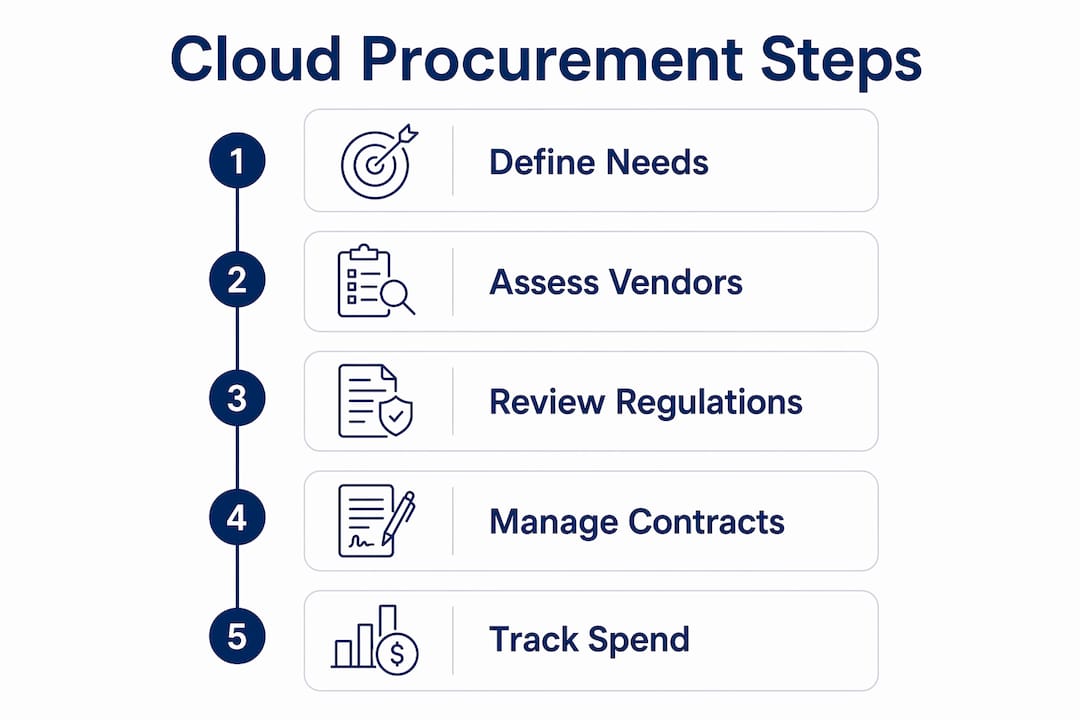
Over 50% of agencies report difficulties in procuring authorized cloud solutions due to outdated guidance and unclear definitions in federal acquisition regulations. That figure means the majority of procurement offices are navigating cloud contracts without a clear regulatory framework. Revised FAR rules are currently under public comment, but agencies cannot wait for final rules to begin modernizing.
Imprecise IT-related Product and Service Codes in the Federal Procurement Data System create a second problem. Inaccurate cloud spend tracking makes it difficult for agencies to conduct accurate cost-benefit analysis or demonstrate return on investment to oversight bodies. Without reliable spend data, budget justifications for continued cloud investment become harder to defend.
Common procurement obstacles agencies face today:
- Outdated FAR definitions that do not reflect how cloud services are priced or delivered
- Imprecise Product and Service Codes that prevent accurate tracking of cloud expenditures
- Multi-vendor interoperability challenges when larger agencies use multiple cloud vendors and face integration complexity
- Inconsistent authorization guidance across different oversight bodies
For navigating cloud procurement effectively, agencies should document their cloud requirements in performance-based terms rather than technical specifications. This approach gives vendors flexibility to propose FedRAMP-authorized solutions that meet mission needs without locking agencies into outdated hardware-era contract structures.
What governance frameworks support successful cloud migration?
Technology is the easier part of cloud migration. Governance is where agencies most often fall short. Cloud migration requires audits of legacy readiness, procurement maturity, and workforce capability, not just a decision to move workloads to a new platform. Agencies that treat cloud as a pure technical upgrade without addressing policy and people typically see cost overruns and security gaps within the first year.
Research confirms that performance expectancy is the strongest predictor of government cloud adoption commitment, with a beta coefficient of 0.38 at p < 0.001. That finding means agencies that believe cloud will improve their efficiency are significantly more likely to commit to full adoption. Building that belief requires early wins, which is why starting with non-sensitive workloads is the most effective migration strategy.
The three standard migration approaches each carry different risk and reward profiles:
- Lift-and-shift moves existing applications to cloud infrastructure with minimal changes. It is the fastest approach but delivers the least efficiency gain because legacy application architectures do not take full advantage of cloud-native features.
- Re-platforming makes targeted modifications to applications so they run more efficiently on cloud infrastructure. It balances speed with performance improvement and suits agencies with moderate technical capacity.
- Re-architecting rebuilds applications as cloud-native services. It delivers the greatest long-term efficiency but requires the most time, budget, and technical expertise.
Workforce readiness is a critical factor that procurement plans rarely address. Staff who managed on-premises servers need training in cloud-native orchestration tools, identity management platforms, and DevOps practices. Agencies that invest in this training before migration reduce post-migration incident rates and avoid the hidden cost of relying entirely on vendor support.
Pro Tip: Start your cloud migration with a non-sensitive, high-visibility workload such as a public-facing website or a reporting dashboard. Early success builds internal confidence, demonstrates value to leadership, and gives your team practical experience before tackling mission-critical systems. Primereadysub recommends this sequencing in every public-sector modernization engagement.
Key Takeaways
Cloud adoption in government succeeds when agencies align technology decisions with governance readiness, security mandates, and procurement reform rather than treating migration as a purely technical project.
| Point | Details |
|---|---|
| Cost model shift | Moving from capital expenditure to pay-as-you-go eliminates hardware refresh cycles and reduces wasted capacity spending. |
| Security compliance | FedRAMP-authorized vendors and Zero Trust Architecture support reduce compliance burden and satisfy NIST 800-53 requirements. |
| Procurement gaps | Over 50% of agencies face procurement difficulties due to outdated FAR definitions and imprecise cloud spend tracking codes. |
| Governance first | Successful migration requires audits of legacy readiness, procurement maturity, and workforce capability before moving workloads. |
| Start small | Beginning with non-sensitive workloads builds internal confidence and reduces risk before tackling mission-critical systems. |
The part of cloud adoption nobody talks about enough
The conversation around cloud in government almost always centers on technology: which platform, which authorization level, which migration path. After working with state agencies and federal program offices across Maryland, New York, and Florida, I have found that the technology decisions are rarely where projects fail. They fail in the governance layer.
Agencies sign cloud contracts and then discover that their procurement staff cannot track spending accurately, their IT teams lack cloud-native skills, and their leadership has no dashboard to measure whether the migration is delivering value. The government cloud security concerns that dominate pre-migration discussions often distract from the operational readiness questions that actually determine outcomes.
The agencies that succeed treat cloud migration as a program, not a project. They assign a dedicated migration lead, establish performance baselines before go-live, and schedule quarterly reviews of cost and performance post-migration. They also share lessons learned with peer agencies rather than treating their multi-cloud strategy as proprietary knowledge. That inter-agency knowledge sharing accelerates adoption government-wide and prevents every agency from making the same expensive mistakes independently.
My honest advice: do not wait for FAR revisions to finalize before starting. Use FedRAMP-authorized vendors, document your requirements in performance terms, and build governance capacity in parallel with your technical migration. The agencies that move now will be better positioned when regulatory clarity arrives.
— Randy
How Primereadysub supports government cloud adoption
Primereadysub, operating as Rutledge & Associates, LLC, specializes in government IT modernization for state agencies and public sector departments. As an SDVOSB, woman-owned, and SBA-certified firm, Primereadysub delivers cloud-native re-architecting, compliance automation, and real-time program dashboards that address the exact challenges covered in this article. The firm works as a defined-scope subcontractor on complex, compliance-heavy programs, reducing oversight burden for prime contractors. Agencies in Maryland, New York, and Florida have used Primereadysub's DevOps pipelines and audit-ready controls to cut processing times and meet federal security mandates. For agencies ready to move beyond legacy infrastructure, Maryland-focused modernization services are available with clear deliverables and measurable outcomes.
FAQ
What is the primary reason government agencies adopt cloud computing?
The primary driver is the shift from capital-intensive hardware ownership to a pay-as-you-go model that reduces legacy data center costs and improves scalability. Security mandates including NIST 800-53 and Executive Order 14028 reinforce this decision.
What is FedRAMP and why does it matter for cloud procurement?
FedRAMP is the federal authorization program that certifies cloud services as compliant with government security standards. Agencies that choose FedRAMP-authorized vendors inherit pre-approved security controls, which reduces their compliance workload and accelerates deployment timelines.
Why do so many agencies struggle with cloud procurement?
The Federal Acquisition Regulation lacks an updated definition of cloud computing, and imprecise Product and Service Codes make cloud spending difficult to track accurately. Over 50% of federal agencies report procurement difficulties as a direct result of this outdated guidance.
What migration strategy is best for a first-time government cloud project?
Starting with a lift-and-shift approach on a non-sensitive, high-visibility workload is the most effective first step. It delivers early results, builds team confidence, and creates a performance baseline before the agency commits to more complex re-architecting efforts.
How does Zero Trust Architecture relate to cloud adoption?
Zero Trust Architecture, required under Executive Order 14028, mandates continuous verification of every user and device regardless of network location. Cloud platforms support Zero Trust natively through identity-based access controls and real-time telemetry, making cloud infrastructure the most practical foundation for compliance.